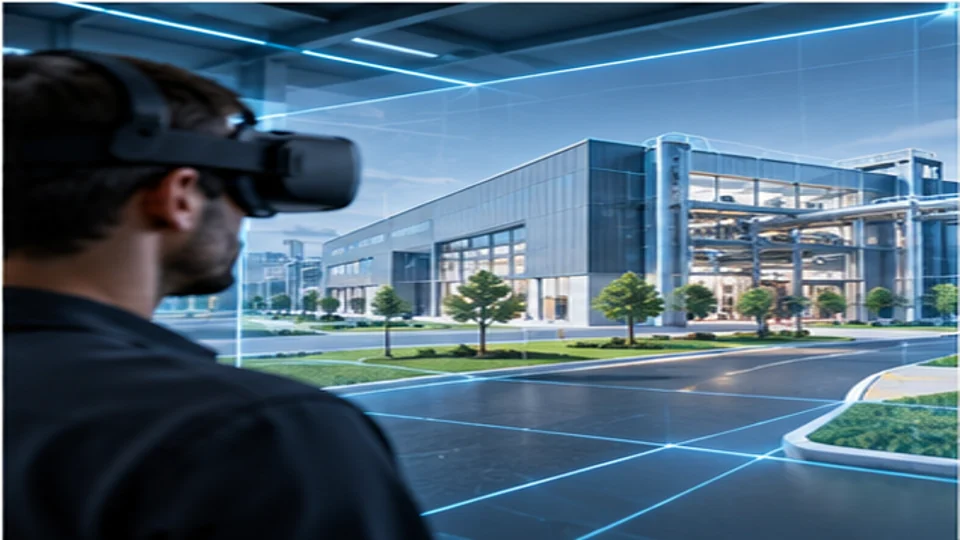
VR architectural visualization allows users to experience spaces that have not yet been built or are difficult to visit physically. The same approach can present industrial facilities, production areas and large-scale developments in an immersive environment.
The project objective and target hardware should be defined early. A VR application may offer free navigation, movement between selected viewpoints or focused inspection of particular products and spaces. The interaction model should match the audience and presentation setting.
Define the communication objective
3D assets must be prepared for real-time VR performance. Geometry, materials, lighting and scene optimization affect both visual quality and smooth operation. User movement, scale and comfort are also part of the experience design.
Review the technical references
In architecture, users can explore interior and exterior spaces at scale. In industrial presentations, facility layouts, machinery positions and operational areas can be reviewed virtually. VR is best understood as a presentation and orientation tool, not automatically as a substitute for a physical site visit.
Plan the visual sequence
Moonstar plans VR applications around the intended users, content scope and hardware requirements. Defining the questions the experience should answer helps keep production focused.